


Fatal Attack on a Presidential Candidate: The Political Security Crisis in Colombia
August 12, 2025 Hour: 12:19 pm
Political Violence in Colombia and Its Impact on Democracy
Political violence in Colombia is a tragically persistent reality, affecting democratic stability and the safety of those who hold public office or exercise social leadership.
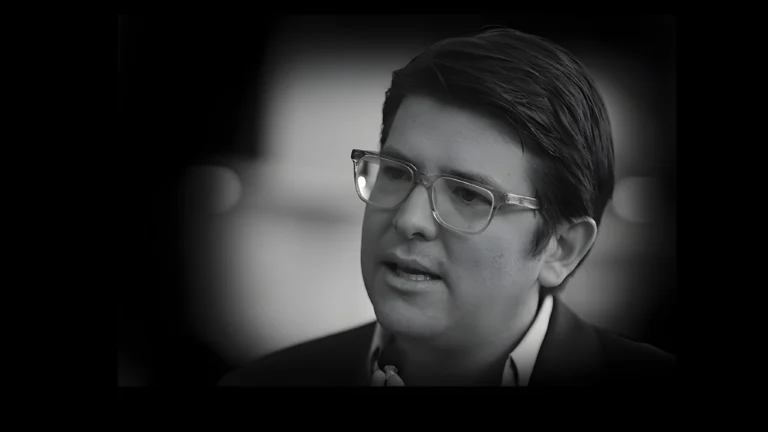
On June 7, 2025, a new painful chapter was written in this history when Miguel Uribe Turbay, a senator from the Centro Democrático party and a presidential pre-candidate, fell victim to an armed attack that took his life weeks later.
This assault not only shocked the country but also reignited debates about political insecurity, extreme polarization, and the state’s role in protecting democracy.
This article provides an in-depth analysis of the events, the context, and the legacy of Miguel Uribe Turbay, as well as the alarming situation of political violence in Colombia and how it affects the upcoming 2026 presidential elections.
The Attack on Miguel Uribe Turbay: Key Facts and Political Context
The Day of the Attack
On June 7, 2025, in the Modelia neighborhood of Fontibón, Bogotá, Miguel Uribe Turbay was at a political event discussing his proposals on mental health and citizen security when he was attacked by a minor just 14 years old.
Security cameras captured how the teenager, bypassing security protocols, fired six shots, seriously wounding the senator with two bullets to the head and one to the leg.
Despite the quick intervention of his supporters and immediate medical attention, Uribe Turbay fought for his life for two months before passing away on August 11.
The Colombian Attorney General’s Office classified the crime as a political assassination (magnicidio), a designation reflecting the severity of the attack and the need to uncover not only the perpetrator but also the masterminds behind it.
Investigations and Arrests
The police and the Attorney General’s Office have made several arrests related to the planning and execution of the attack.
However, as of now, no official information has been released about who the intellectual authors were or the specific motivations behind this act of political violence.
Impunity and the lack of resolution in violent crimes against political leaders have long been problems in Colombia, and Uribe Turbay’s case appears to be no exception.
Miguel Uribe Turbay: Life, Career, and Political Journey
Origins and Education
Miguel Uribe Turbay came from one of Colombia’s most politically prominent families. The grandson of former President Julio César Turbay Ayala and a descendant of Diana Turbay, a journalist murdered in a kidnapping linked to drug trafficking, his life was marked by both political commitment and tragedy.
He studied law at the University of Los Andes and later earned a master’s degree in Public Administration from Harvard University, which solidified his technocratic and economically liberal profile, combined with a conservative stance on security and institutional order.
Political Career and Proposals
His political career began with his election to the Bogotá City Council at age 25, eventually becoming its president and later serving as Government Secretary under Mayor Enrique Peñalosa.
In 2019, he launched his campaign for mayor of Bogotá, focusing on security, order, and administrative efficiency.
In 2022, he became a senator for the Centro Democrático party, founded by Álvaro Uribe Vélez, with whom he maintained a close relationship and shared a political vision opposing Gustavo Petro’s government.
Among his key proposals were:
- Security: A tough-on-crime policy, including banning drug use in public spaces and reforms to strengthen the justice system and law enforcement.
- Economy: Tax reforms to lower rates and attract foreign investment, as well as healthcare reforms to ensure legal security and investment in the sector.
- Criticism of Petro’s Government: He staunchly opposed the structural reforms proposed by the current administration, arguing they jeopardized fiscal stability and economic development.
His forceful opposition to Gustavo Petro, dating back to Petro’s time as mayor of Bogotá, positioned him as one of the most vocal and confrontational voices in the Senate, defending liberal economic policies and a firm-handed approach to security.
Political Violence in Colombia: A Persistent and Ongoing Vile
Assassinations and Attacks in Recent History
Colombia has endured decades marked by political violence. During the 1980s and 1990s, high-profile assassinations such as those of Luis Carlos Galán, Jaime Pardo Leal, and Bernardo Jaramillo left an indelible mark, representing the most extreme manifestation of a complex armed conflict involving guerrillas, paramilitaries, and drug cartels.
Although the country has made progress in peace agreements and security policies, violence against social leaders, politicians, and candidates remains a serious threat to democracy and political participation.
Recent Statistics on Political Violence (2024-2025)
The latest figures reveal that political violence in Colombia not only persists but has intensified in certain regions and sectors:
- In 2024, the organization Somos Defensores documented 157 killings of social leaders, one every two days. The Electoral Observation Mission reported a 60% increase in attacks on community leaders compared to 2023.
- In the first months of 2025, the Ombudsman’s Office reported 81 killings, while the UN recorded 129 complaints of murders or threats against social and political leaders.
- The most affected regions are Cauca, Antioquia, Valle del Cauca, and Norte de Santander, where territorial disputes between illegal armed groups and weak state presence create an especially critical situation.
- Victims include Indigenous, community, and environmental leaders, as well as political candidates, endangering democratic pluralism.
- The lack of effective protection and the state’s failure to enforce security measures worsen the situation, fostering impunity and distrust.
The Impact of Miguel Uribe Turbay’s Assassination on the 2026 Presidential Elections
The attack and subsequent death of Miguel Uribe Turbay directly affect Colombia’s political trajectory and the dynamics of the upcoming presidential elections:
- His rise within the Centro Democrático and his position as a potential presidential candidate gave him an advantage in the party’s internal race to select the right-wing nominee for 2026.
- The incident has heightened public awareness and placed the urgent need for candidate and political leader security at the center of the electoral debate.
- Leaders at all levels are demanding faster, more transparent investigations and a comprehensive public policy against political violence.
Protecting Democracy in a Divided Country
Colombia faces a profound structural challenge: how to ensure security and political participation amid prolonged violence, ideological polarization, and the presence of illegal armed groups.
The assassination of Miguel Uribe Turbay should not be an isolated event but a wake-up call to rethink and rebuild state protection mechanisms, strengthen the justice system, and promote a political culture based on respect and dialogue.
Only then can the country move toward a full democracy that respects the lives and voices of its citizens, preventing violence from becoming an obstacle to politics and Colombia’s future.